LASIK Surgery
LASIK (Laser-Assisted In Situ Keratomileusis) is a laser vision-correction procedure that reshapes the cornea to correct refractive errors and reduce dependence on glasses or contact lenses.

At Aberdeen Eye Surgery, we offer Customised LASIK exclusively, rather than conventional or standard LASIK. This reflects our focus on providing personalised laser vision correction based on the unique characteristics of each patient’s eyes.
Customised LASIK is an advanced form of laser vision correction that uses detailed measurements of the cornea and the eye’s optical characteristics to create an individualised treatment profile for each eye. Factors such as corneal shape, curvature, thickness and other optical characteristics are assessed to guide the laser treatment.
The treatment is designed to provide precise correction of refractive errors, including myopia, hyperopia and astigmatism, while taking into consideration the individual characteristics of each eye. Depending on the patient’s specific visual needs and eye characteristics, customised treatment may also help optimise aspects of visual quality such as night vision and contrast sensitivity.
A comprehensive pre-operative assessment is essential to determine whether Customised LASIK is suitable and to establish the most appropriate treatment plan for each patient.
All-Laser LASIK Video
Customised LASIK may be combined with LASIK Xtra™ , a rapid corneal collagen cross-linking treatment performed after laser vision correction to enhance corneal stability.
RevitaLASIK may also be considered as an additional vision training program to improve visual function in patients with amblyopia, eye diseases and other vision conditions.
LASIK Procedure
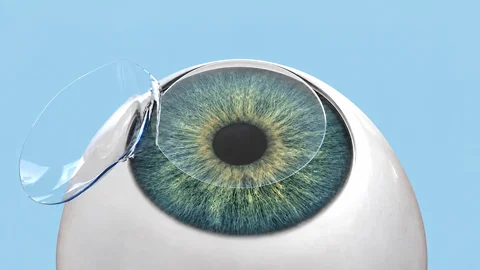
A femtosecond laser is used to create a thin, precisely controlled flap in the cornea. The laser delivers rapid pulses of laser energy at a predetermined depth to separate the corneal tissue and form the flap. As no surgical blade is used, this is commonly described as a bladeless LASIK procedure. The flap remains attached to the cornea by a small hinge, allowing it to be gently lifted during the next stage of treatment.
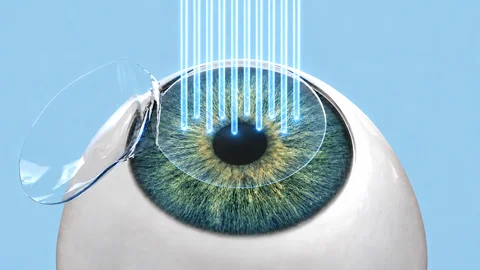
Once the corneal flap is carefully lifted, an excimer laser is used to remove microscopic amounts of corneal tissue and reshape the underlying cornea. The treatment follows the patient’s individualised treatment profile, based on detailed measurements obtained during the pre-operative assessment. Reshaping the cornea changes how light is focused onto the retina, correcting the patient’s refractive error. Once the laser treatment is complete, the flap is carefully repositioned over the treated area, where it naturally adheres as the eye begins to heal..
Customised LASIK
Types of Customised LASIK
-
Wavefront-Guided LASIK
Uses whole-eye wavefront measurements to identify optical aberrations and incorporate them into the laser treatment.
However, wavefront measurements can be influenced by structures such as the natural lens and do not directly map the three-dimensional shape of the cornea.
-
Wavefront-Optimised LASIK
Also known as aspheric LASIK, this approach is designed to minimise the induction of certain optical aberrations during treatment.
It is widely used and can provide predictable results but offers less individualised corneal treatment than corneal wavefront- or topography-guided LASIK.
-
Corneal Wavefront-Guided / Topography-Guided LASIK
Uses detailed measurements of the cornea to create a highly personalised treatment plan.
By identifying subtle corneal irregularities and incorporating them into the laser treatment, the aim is to create a smoother, more optically regular corneal surface while correcting the refractive error.
Benefits of Customised LASIK
- Personalised treatment planning
- Precise correction of myopia, hyperopia and astigmatism
- Consideration of individual corneal characteristics
- Optimisation of the treatment zone
- Attention to night-vision quality
- Potential improvement in overall quality of vision
Results vary between individuals, and no laser vision procedure can guarantee perfect vision or eliminate all visual symptoms.
Standard LASIK vs Customised LASIK
| Standard LASIK | Customised LASIK | |
|---|---|---|
| Pre-surgical assessment | Relatively straightforward | More detailed and comprehensive |
| Individual eye characteristics | Limited consideration | Detailed assessment and treatment of each eye |
| Night vision | May be affected, particularly in patients with large pupils | Designed to preserve and potentially improve night vision, especially in patients with larger pupils |
| Surgeon expertise | Important | Particularly important due to the complexity of customised treatment |
| Treatment planning | Based mainly on standard refractive measurements | Tailored to the unique characteristics of each eye |
| Visual results | Generally good | Potential for excellent visual quality |
| Quality of vision | Good | Very good to excellent |
LASIK Xtra™
LASIK Xtra™ combines laser vision correction with rapid corneal collagen cross-linking performed immediately after treatment.
Benefits of LASIK Xtra™
- Enhanced corneal biomechanical stability
- Better maintenance of the intended corneal shape
- Reduced postoperative regression in selected patients
- Additional corneal stability
Suitability depends on the patient's corneal measurements, prescription and overall assessment.
RevitaLASIK
For selected patients, RevitaLASIK may be considered as an additional visual rehabilitation programme.
It combines Customised LASIK with visual training designed to help the brain process visual information more effectively.
The Technology Behind Your LASIK
Femtosecond Laser
The IntraLase™ iFS® Femtosecond Laser creates your corneal flap without a mechanical blade.
Key advantages include:
- Blade-free flap creation
- Precise flap dimensions and thickness
- Controlled flap architecture
- Accurate positioning
- Reduced risk of certain mechanical flap complications
Excimer Laser
The SCHWIND AMARIS® 1050RS Excimer Laser reshapes your cornea according to the customised treatment plan.
Key features include:
- High-speed laser delivery
- Advanced eye tracking
- Fully Customizable treatment profiles
- Rapid treatment
- Precise laser positioning
LASIK Fees for Dr Gerard Nah
| Price (excl. GST) | Price (incl. 9% GST) | |
|---|---|---|
| Assessment (Consultation and Investigation) | $200.00 - $400.00 | $218.00 - $436.00 |
| LASIK Surgery | $4,350.00 | $4,741.50 |
| TransPRK Surgery | $4,350.00 | $4,741.50 |
| Soft Touch PRK Surgery | $4,350.00 | $4,741.50 |
Fees do not include medicines and other consummables.
Your Suitability for LASIK
LASIK is not suitable for everyone. Suitability depends on factors including:
- Prescription
- Corneal shape and thickness
- Overall eye health
- Tear-film condition
- Pupil size
- Age
- Visual requirements and expectations
Your Pre-LASIK Assessment
A comprehensive assessment determines whether LASIK is appropriate for you, which treatment is most suitable, whether customised treatment offers an advantage and whether LASIK Xtra™ should be considered. This assessment may take several hours and can include:

| Refraction | Measures the spectacle prescription and refractive error. |
|---|---|
| Corneal Topography | Maps the shape and curvature of the cornea. |
| Corneal Tomography | Assesses the front and back corneal surfaces and thickness. |
| Corneal OCT | Provides high-resolution imaging of the corneal layers. |
| Wavefront Assessment | Evaluates optical imperfections and visual distortions. |
| Pupil Assessment | Measures pupil size under different lighting conditions. |
| Corneal Pachymetry | Measures corneal thickness. |
| Cycloplegic Refraction | Temporarily relaxes the eye's focusing mechanism for a more accurate refractive measurement. |
A comprehensive eye examination, including retinal assessment and intraocular pressure measurement, is also performed.
Before Your Assessment
- Stop soft contact lenses for at least 7 days.
- Stop hard/RGP lenses for at least 2 weeks.
- Bring your current contact lenses and prescription information if available.
- Bring sunglasses.
- Avoid driving yourself to the assessment.
Some tests temporarily dilate the pupils, causing blurred vision and light sensitivity for approximately 36–48 hours.
Patients Over 40
Presbyopia gradually reduces the eye's ability to focus on near objects. Correcting distance vision with LASIK therefore does not necessarily eliminate the need for reading glasses.
For patients over 40, monovision may be recommended as an option to reduce dependence on glasses and achieve a suitable range of vision.
Scheduling Your Surgery
After the assessment, there is usually an interval before surgery to allow diagnostic effects such as pupil dilation to settle and to review the treatment plan.
Both eyes may be treated on the same day or, in selected cases, separately. If treated separately, the second eye may be scheduled about one week later.
Preparing For Your LASIK
Before Your LASIK Surgery
- Follow the recommended contact-lens removal period.
- Practise keeping your eyes steady while looking at a fixed target.
- Do not wear eye make-up on the day of surgery.
- No perfumes, colognes or hairspray on the day of surgery.*
- Arrange transportation. Do not drive on the day of surgery.
*Excimer lasers are highly sensitive to contaminants. To ensure optimal performance and accuracy, patients and clinical staff should avoid scented products and aerosols on the day of surgery.
During Your LASIK Surgery
LASIK is performed using anaesthetic eye drops and is generally not painful.
Step 1: Femtosecond Laser Flap
- Anaesthetic drops are applied.
- The eye is aligned with the laser.
- A suction ring stabilises the eye.
- The femtosecond laser creates the corneal flap.
- The suction ring is removed.
Flap creation takes only a few seconds.
Step 2: Customised Excimer Laser Treatment
- The eye is aligned with the excimer laser.
- You focus on a target light.
- The corneal flap is gently lifted.
- The excimer laser reshapes the cornea according to your treatment plan.
- LASIK Xtra™ is performed if recommended in your treatment.
- The flap is repositioned.
- A protective contact lens may be placed if required.
The procedure is generally completed within minutes.
Expections After LASIK
Vision often improves quickly, although recovery varies.
Temporary symptoms may include:
- Mild foreign-body sensation
- Watery eyes
- Light sensitivity
- Fluctuating vision
- Hazy or misty vision
- Mild discomfort
- Dryness
Vision usually continues to stabilise over the following days and weeks. Some patients, particularly those with higher prescriptions, may experience temporary night-vision disturbances.
Follow-Up Care After LASIK
Postoperative reviews monitor your:
- Corneal healing
- Visual acuity
- Refractive outcome
- Corneal stability
- Eye pressure
- Dry-eye symptoms
- Overall recovery
Eye Care After LASIK
First Week
Avoid:
- Vigorous exercise
- Rubbing your eyes
- Contaminated water entering the eyes
- Activities exposing the eyes to dust or debris
First Month
Take particular care with:
- Swimming and water sports
- Contact or collision sports
- Eye make-up, according to your surgeon's instructions
- Eyelash extensions and facials around the eyes
Typical make-up guidance:
- Eye cream and eyeshadow: avoid for about 1 week
- Mascara and eyeliner: avoid for about 2 weeks
- Eyelash extensions/facials around the eyes: avoid for about 1 month
Your surgeon may adjust these recommendations according to your recovery.
Your LASIK Experience
The right LASIK treatment begins with a comprehensive assessment.
Your prescription, corneal characteristics, age, visual requirements and expectations all influence the most appropriate treatment.
At Aberdeen Eye Surgery, we combine detailed eye assessment, personalised treatment planning, advanced laser technology and careful postoperative monitoring to help achieve the best possible visual outcome.
Contact us to know more about LASIK or to book your appointment.
 +65 6738 8122
 WhatsApp